No products in the cart.
Blog
What is Applique? A Beginner’s Guide to This Fun Embroidery Technique
12
Dec
Dec
Ever seen a beautifully layered design on a t-shirt or quilt and wondered how it was made? You might have been looking at applique! This guide will teach you the basics of applique, from its simple definition and different types to the essential tools you need to start creating beautiful, textured embroidery projects with your machine.
What is Applique in Embroidery? A Simple Definition
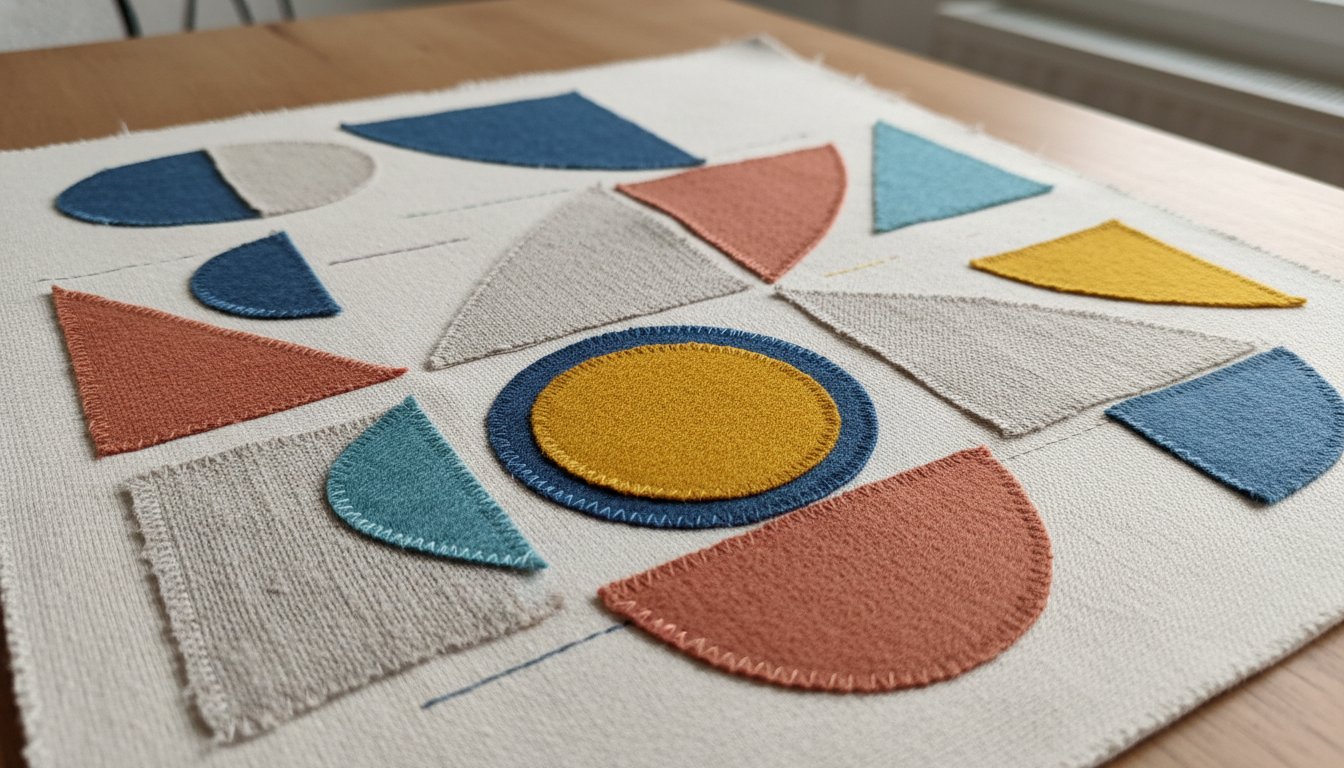
In the simplest terms, applique is a fun embroidery technique that involves stitching pieces of fabric onto a larger base fabric to create a design. It’s a fantastic way to add dimension, texture, and vibrant color to your projects efficiently. Think of it as “painting with fabric” using your embroidery machine as the brush. This method is perfect for personalizing all sorts of items, from clothes and tote bags to quilts and home decor, giving them a unique, high-quality finish.
Applique vs. Embroidery: What’s the Key Difference?
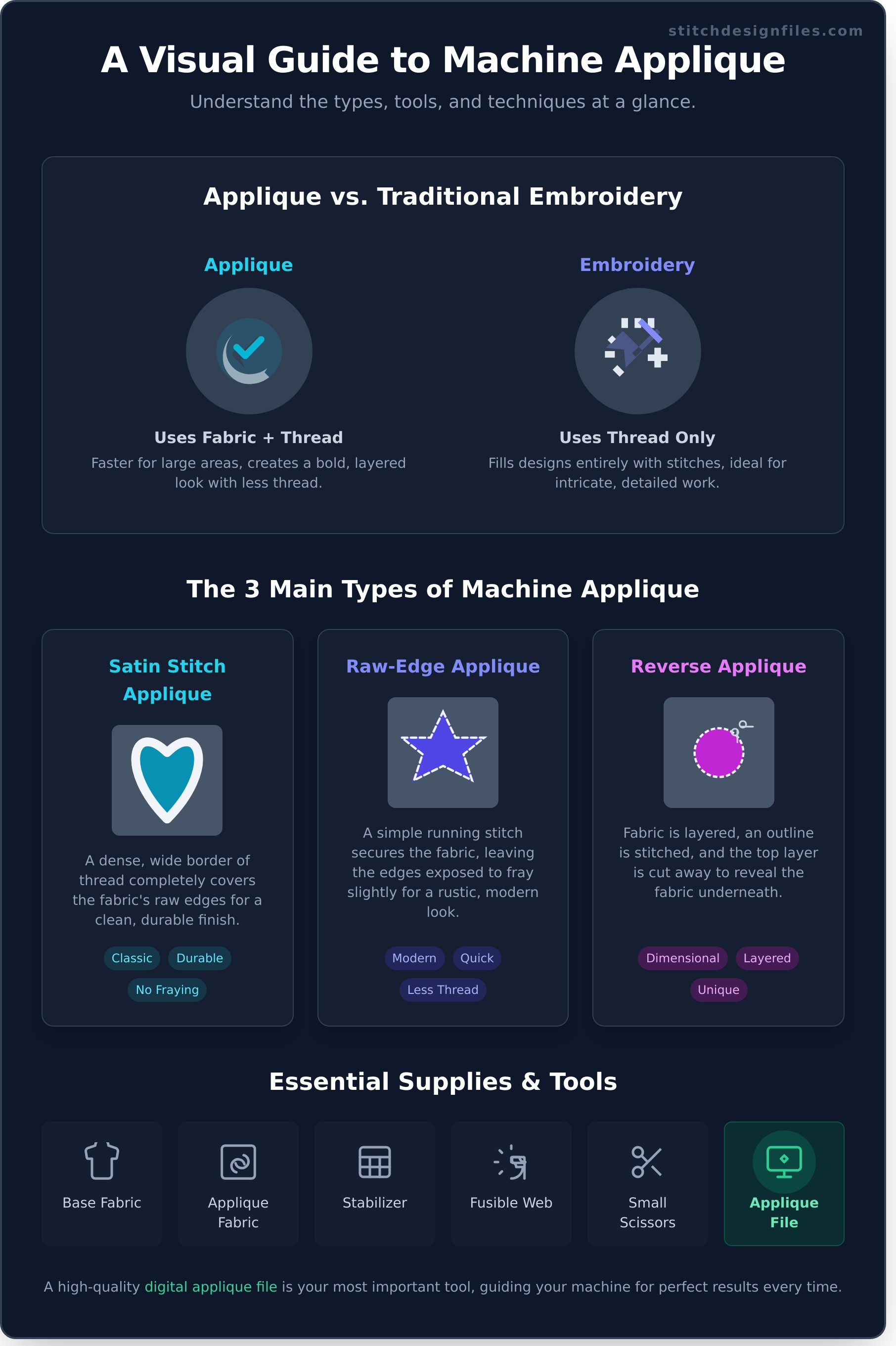
While closely related, applique and standard embroidery have one key difference. Traditional embroidery uses only thread to create a design from scratch, filling in every detail with stitches. Applique, on the other hand, uses pieces of fabric for the main shapes and colors, with thread used to stitch them down and add decorative outlines or details. This makes applique a much faster technique for filling large colored areas, saving you time and thread while creating a bold, layered look.
The Main Types of Applique for Machine Embroidery
Different applique styles can create wonderfully unique visual effects. Most digital applique designs you find will use one of these popular methods, each with its own distinct look and feel.
Satin Stitch Applique (The Classic)
This is the most common and traditional style of machine applique. A clean, bold border of dense satin stitches is used to completely cover the raw edges of the applique fabric. This technique provides a polished, professional, and highly durable finish that looks fantastic. It’s the ideal choice for children’s clothing and any items that will be washed often, as the satin stitch border protects the fabric edges from fraying.
Raw-Edge Applique (Modern & Quick)
For a more modern and rustic look, raw-edge applique is a popular choice. Instead of a thick satin stitch, this method uses a simple running stitch (or sometimes a looser zig-zag stitch) to secure the fabric piece in place, just inside the cut edge. The fabric edges are left exposed, which allows them to fray slightly over time, adding to the design’s charm. This technique is fast, uses less thread, and is great for decorative items like wall hangings, cushions, and art quilts.
Reverse Applique: A Unique Layering Technique
Reverse applique flips the traditional process on its head for a striking effect. Instead of placing fabric on top of your base, you stack your fabrics first. The machine then stitches an outline, and you carefully cut away the top layer of fabric from inside the stitching line. This reveals the color and pattern of the fabric underneath. It’s a creative way to achieve a dimensional, layered look that is truly unique.
What You Need to Get Started with Machine Applique
The great news is that you don’t need a lot of special equipment to start your first applique project. Most of the supplies are standard items that you likely already have for your machine embroidery hobby.
Essential Supplies for Your First Project
- Base Fabric: This is the main item you are decorating, such as a t-shirt, a tote bag, a tea towel, or a piece of quilting cotton.
- Applique Fabric: Small pieces and scraps of fabric are perfect for this! Non-stretchy, 100% cotton is the easiest to work with for beginners, but felt also works well.
- Stabilizer: This is crucial for success. A stabilizer is placed behind your base fabric to prevent it from puckering or stretching during the stitching process, ensuring your design stays flat and crisp.
- Fusible Web (like HeatnBond): This is a double-sided, iron-on adhesive that acts as a temporary glue. You iron it onto the back of your applique fabric to hold it perfectly in place on your base fabric before stitching.
- Small, Sharp Scissors: A pair of small, curved embroidery scissors will be your best friend for trimming the applique fabric close to the stitch lines.
The Most Important Tool: An Applique Design File
For machine embroidery, the most critical tool is a high-quality digital applique file. These specialized files are programmed with all the necessary steps to tell your machine exactly what to do. They include a placement stitch to show you where to put your fabric, a tack-down stitch to secure it, and the final decorative border stitch. Using a professionally digitized file ensures you get perfect, beautiful, and repeatable results every single time. Ready to find the perfect design for your next project? Explore our easy-to-use applique designs now!
Frequently Asked Questions
Is applique difficult for beginners?
Not at all! Machine applique is surprisingly beginner-friendly. As long as you have a quality digital design file, the machine does most of the hard work. Your main job is to place the fabric and trim it, which becomes easy with a little practice.
What is the best fabric to use for applique?
For beginners, 100% quilting cotton is the best choice. It doesn’t stretch, it’s easy to cut, and it comes in endless colors and patterns. Felt is another great option as its edges don’t fray.
Do you need a special sewing machine for applique?
You don’t need a special machine, but you do need an embroidery machine. Any machine capable of reading digital embroidery files (like .PES, .DST, .JEF, etc.) can be used for applique.
How do I stop my applique fabric from fraying?
The easiest way is to choose a satin stitch applique design. The dense border of thread completely covers the raw edges, preventing any fraying. Using a fusible web also helps to seal the edges.
Can I turn any picture into an applique design?
Turning a picture into an applique file requires a process called digitizing, which is done with special software. While it’s a skill you can learn, it’s much easier for beginners to start with professionally digitized files that are proven to stitch out perfectly.
Now that you understand the basics, you’re ready to add this amazing technique to your creative toolkit. Applique opens up a world of possibilities, allowing you to create bold, custom projects quickly and easily. With our instant digital downloads, you can get started right away and create something truly special. All of our files are professionally crafted for flawless stitch-outs and are compatible with all major embroidery machine brands. Bring your ideas to life! Browse our top applique designs.
